THE IDEA
Magnitude and direction
A vector has a magnitude and a direction; a scalar has only a magnitude. Location depends on direction, but the volume of a block of iron does not.
Scalar or vector? vectordoodles
THE MATHS OF ARROWS
Some numbers need an arrow to make sense.
Five miles north and five miles east are the same distance but take you to very different places. Scientists call quantities like that vectors. NASA's beginner's guide to aeronautics uses them to explain why planes take off into the wind and how kites stay up.
ARROWS have two numbers
Scalar or vector?THE SHORT ANSWER
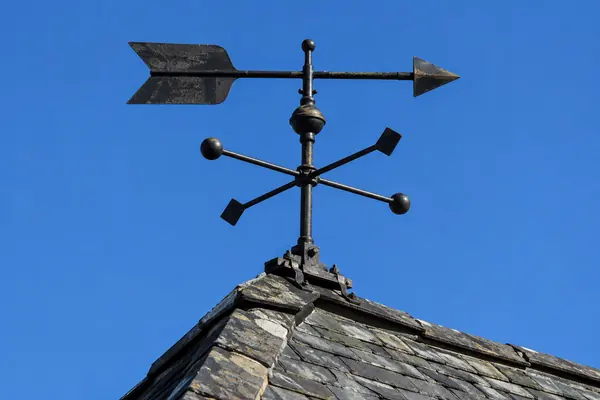
A vector is drawn as an arrow.
Its length and its tip both carry information.
THE IDEA
A vector has a magnitude and a direction; a scalar has only a magnitude. Location depends on direction, but the volume of a block of iron does not.
Scalar or vector?HEADWINDS
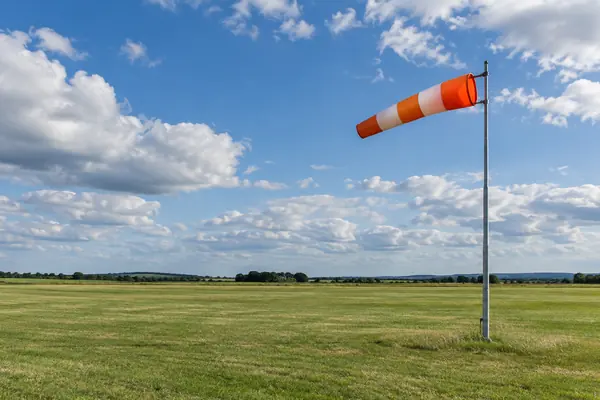
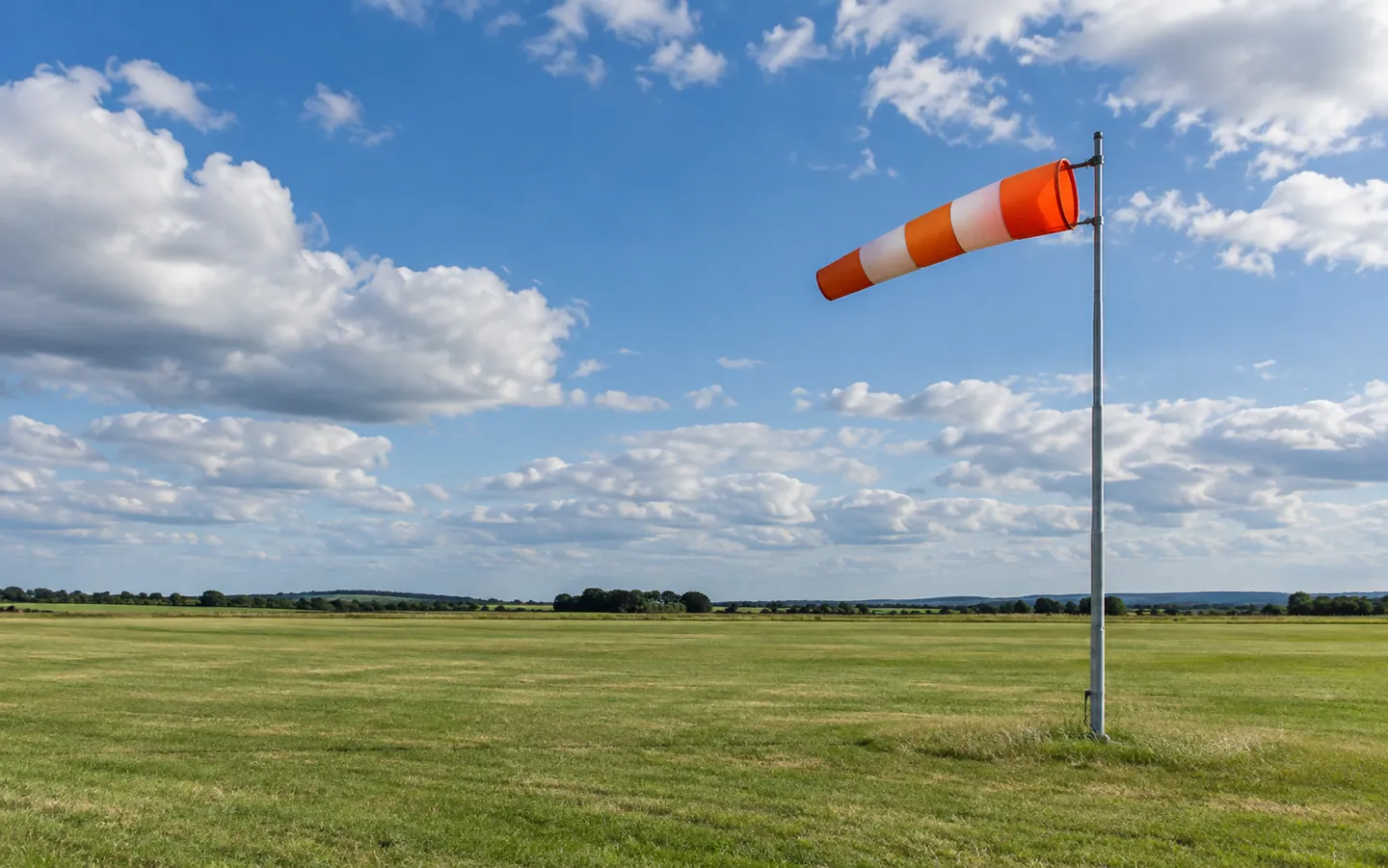
Airspeed is the vector difference between ground speed and wind speed. Taking off into the wind needs less ground speed, so less runway.
See the numbersKITES
A kite on a string has no ground speed, but it still has an airspeed equal to the wind speed, which is what keeps it flying.
Adding arrows
ADDING TWO ARROWS
This is the method NASA's guide uses to add two vectors. You can do it on squared paper.
Make the length match the size and point the tip in the direction.
Measure how far each one goes across (x) and how far up (y). These components are ordinary numbers.
Add the two x parts together and the two y parts together to get the components of the new arrow.
The two components form a right-angled triangle, so the new arrow's length is the square root of x² + y².
TWO NUMBERS WORTH KNOWING
One figure from a NASA take-off example,
one from how the Met Office reports wind.
80 mph
Ground speed needed with a 20 mph headwind
In NASA's example a plane needs 100 mph airspeed to lift off. Into a 20 mph headwind, 80 mph along the runway is enough. With the same wind behind it, 80 mph gives only 60 mph airspeed and it runs out of runway.
TAKE-OFF · NASA
270°
Bearing of a westerly wind
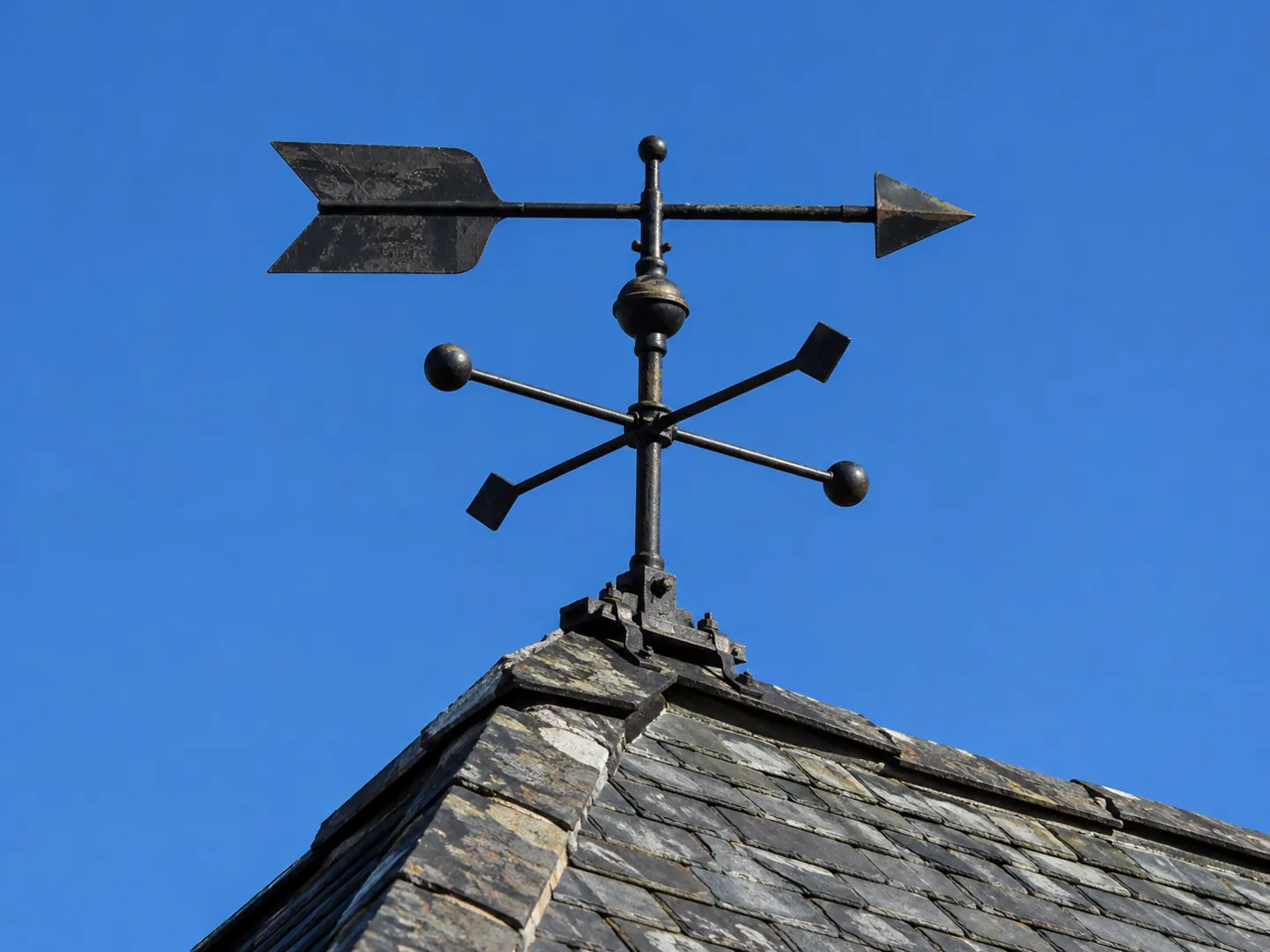
Wind direction is reported as where the wind blows from, measured from true north. An easterly is 90 degrees, a southerly 180 and a westerly 270.
WIND DIRECTION · MET OFFICE
The Met Office measures wind with an anemometer and a vane at the top of a 10 metre mast, and reports the average speed and direction over the ten minutes before the reporting time.
A QUICK SORTING CHECK
Pick a quantity to see whether it is a vector or a scalar. The bar is full when direction is part of the answer.
Based on NASA Glenn Research Center's Beginner's Guide to Aeronautics, which sorts flight quantities into vectors and scalars.
WHY IT MATTERS
When you add two vectors, the result usually points in a new direction, and its size is not simply the two sizes added together. That is why vector arithmetic has to keep track of direction at every step.
NASA notes that the x and y axes of an ordinary graph are themselves vectors, so anyone who has drawn a graph has used vectors already. Real forces have three components, not two, because space has three dimensions.
Questions
A vector has a magnitude and a direction; a scalar has only a magnitude. Velocity, force and displacement are vectors; mass, temperature and energy are scalars.
No. NASA's guide defines speed as the scalar size of a velocity vector. Velocity is the vector, because it includes the direction.
A headwind adds to the airspeed, so the plane needs less ground speed to lift off and can take off or land in a shorter distance.
No. The Met Office reports wind by where it blows from, so a northerly comes from the north. A westerly comes from 270 degrees.
As an arrow. The length of the arrow shows the magnitude and the tip shows the direction, often measured as an angle from the x axis.
Updated
ABOUT THIS NAME
vectordoodles.com is part of the DoodleSale portfolio. It isn't in an auction right now, but you can ask about leasing it.